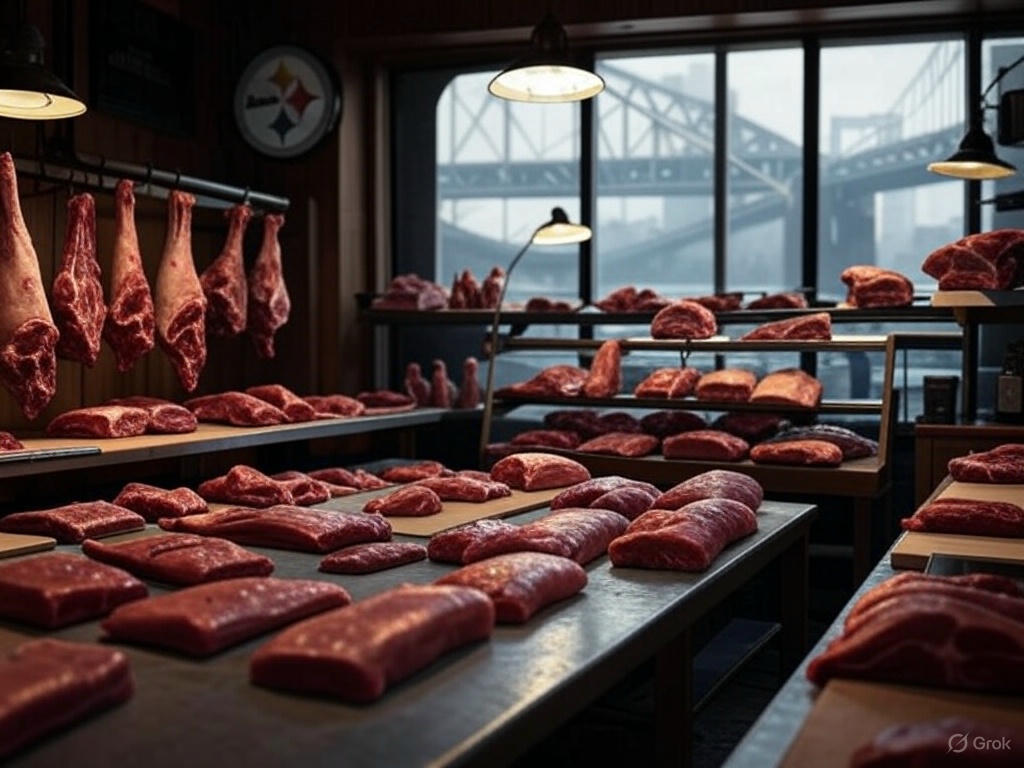
The Ultimate Guide to Meat Cuts: From Butcher to Table
A comprehensive resource for understanding, selecting, and preparing different cuts of meat like a professional.
Introduction
Understanding meat cuts is an essential skill for any home cook, aspiring chef, or food enthusiast. This guide aims to demystify the butcher’s counter, helping you make informed decisions about the meat you purchase and prepare. Whether you’re planning an elegant dinner party, a casual family meal, or simply trying to expand your culinary knowledge, mastering meat cuts will enhance your cooking experience and help you get the most value from your purchases.
Beef Cuts: A Complete Breakdown
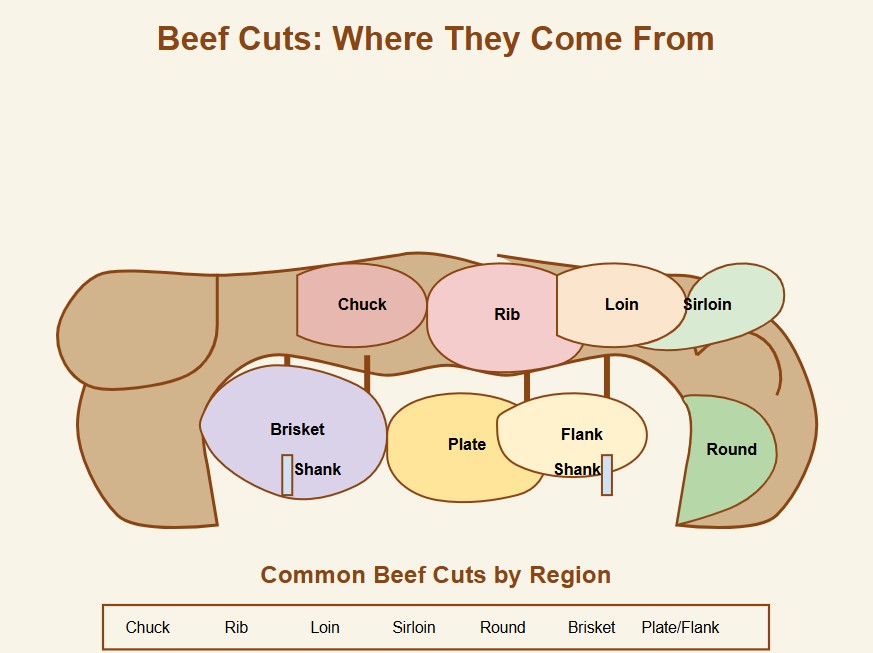
Primal Cuts
Before diving into specific cuts, it’s important to understand that all beef cuts come from eight primal sections:
- Chuck (Shoulder)
- Rib
- Loin
- Round (Rear)
- Brisket (Chest)
- Plate (Lower Chest/Abdomen)
- Flank (Lower Abdominal Wall)
- Shank (Upper Leg)
Premium Steak Cuts
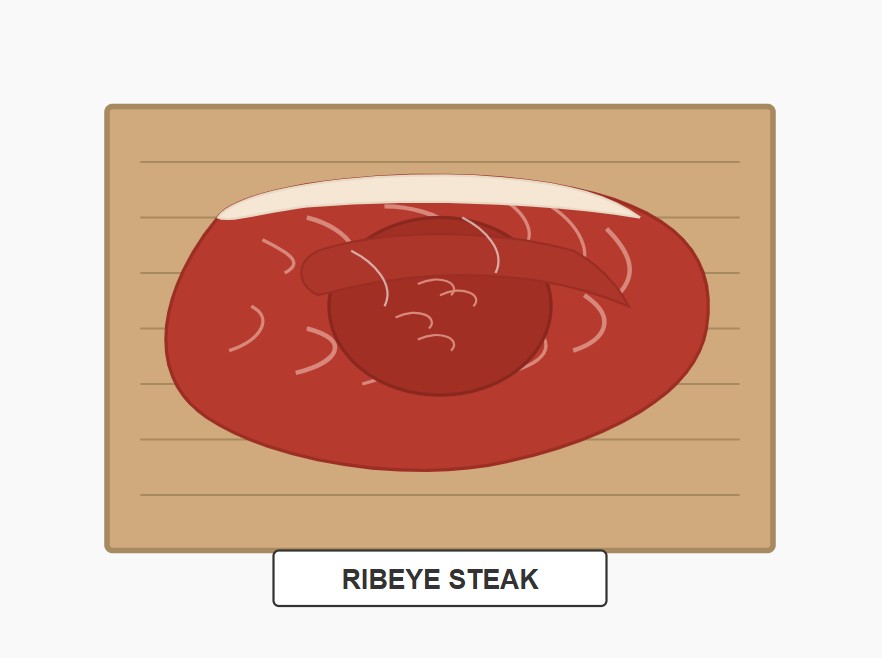
Ribeye
- Location: Cut from the rib section
- Characteristics: Rich marbling, tender with excellent flavor
- Best cooking methods: Grilling, broiling, pan-searing
- Ideal internal temperature: 130-135°F (medium-rare)
- Pro tip: Let rest for 5-10 minutes after cooking for optimal juiciness
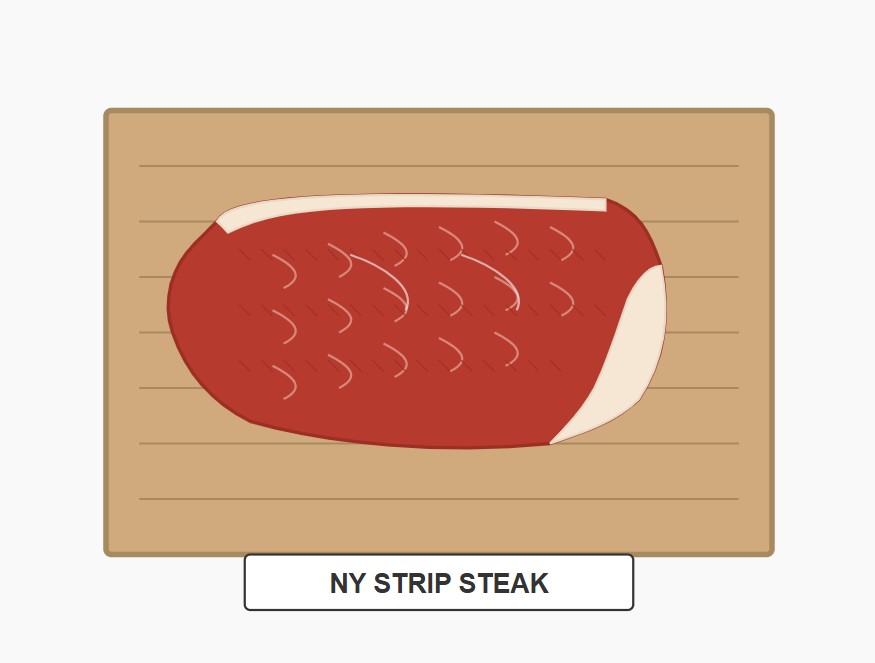
Strip Steak (NY Strip)
- Location: Cut from the short loin
- Characteristics: Fine-grained texture with good marbling
- Best cooking methods: Grilling, broiling, pan-searing
- Ideal internal temperature: 130-135°F (medium-rare)
- Pro tip: Season generously with salt and pepper; the robust flavor stands up well to bold seasonings
Tenderloin (Filet Mignon)
- Location: Cut from the loin, beneath the ribs
- Characteristics: Most tender cut, lean with minimal fat
- Best cooking methods: Pan-searing and finishing in oven, grilling
- Ideal internal temperature: 125-130°F (rare to medium-rare)
- Pro tip: Often wrapped in bacon to add flavor and prevent drying out

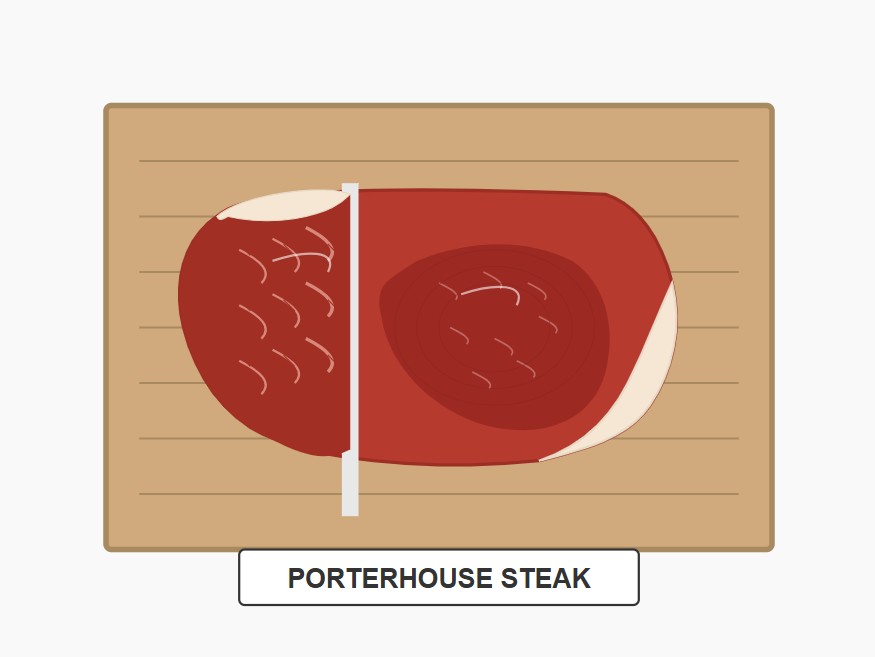
T-Bone & Porterhouse
- Location: Cut from the short loin, containing both strip steak and tenderloin
- Characteristics: The best of both worlds – tenderness and flavor
- Best cooking methods: Grilling, broiling
- Ideal internal temperature: 130-135°F (medium-rare)
- Pro tip: Position the tenderloin portion further from direct heat when grilling
Roasts and Braises
Chuck Roast
- Location: Cut from the shoulder area
- Characteristics: Well-marbled, flavorful but tough if not cooked properly
- Best cooking methods: Slow roasting, braising, pressure cooking
- Ideal cooking time: 3-4 hours at 275°F until fork-tender
- Pro tip: Makes excellent pot roast with root vegetables
Brisket
- Location: Cut from the breast section
- Characteristics: Contains a lot of connective tissue, very flavorful when cooked properly
- Best cooking methods: Slow smoking, braising
- Ideal cooking time: 1-1.5 hours per pound at 225-250°F
- Pro tip: Essential to slice against the grain for tenderness
Prime Rib (Standing Rib Roast)
- Location: Cut from the rib section
- Characteristics: Tender, flavorful, impressive centerpiece roast
- Best cooking methods: Dry roasting
- Ideal cooking time: 15-20 minutes per pound at 325°F
- Pro tip: Start with high heat (450°F) for 15 minutes, then reduce temperature
Economical Cuts
Flank Steak
- Location: Cut from the abdominal muscles
- Characteristics: Lean, flavorful, with distinct grain
- Best cooking methods: Hot and fast grilling, stir-frying
- Ideal cooking time: 3-5 minutes per side for medium-rare
- Pro tip: Always slice thinly against the grain after resting
Skirt Steak
- Location: Cut from the plate section
- Characteristics: Long, thin cut with strong beef flavor
- Best cooking methods: High-heat grilling, broiling
- Ideal cooking time: 2-4 minutes per side for medium-rare
- Pro tip: Perfect for fajitas and stir-fries
Chuck Eye Steak
- Location: Cut from the chuck section, adjacent to the ribeye
- Characteristics: Similar to ribeye but more affordable
- Best cooking methods: Grilling, broiling
- Ideal cooking time: 4-5 minutes per side for medium-rare
- Pro tip: Often called the “poor man’s ribeye” – excellent value
Pork Cuts: From Nose to Tail
Premium Cuts
Pork Loin
- Location: Runs along the back of the pig
- Characteristics: Lean, mild flavor
- Best cooking methods: Roasting, grilling
- Ideal internal temperature: 145°F with 3-minute rest
- Pro tip: Brining before cooking adds moisture and flavor
Pork Tenderloin
- Location: Small muscle running along the spine
- Characteristics: Most tender cut, very lean
- Best cooking methods: Roasting, grilling, pan-searing
- Ideal internal temperature: 145°F
- Pro tip: Cooks quickly – avoid overcooking to prevent dryness
Pork Chops
- Location: Cut from the loin perpendicular to the spine
- Types: Rib chops, center-cut chops, blade chops
- Best cooking methods: Grilling, pan-searing, baking
- Ideal internal temperature: 145°F with 3-minute rest
- Pro tip: Bone-in chops have more flavor and stay juicier during cooking
Slow-Cook Cuts
Pork Shoulder (Boston Butt)
- Location: Upper part of the front leg
- Characteristics: Well-marbled, becomes very tender when slow-cooked
- Best cooking methods: Smoking, slow roasting, braising
- Ideal cooking time: 1.5-2 hours per pound at 225-250°F until reaches 195-205°F
- Pro tip: Perfect for pulled pork
Pork Belly
- Location: Underside of the pig (source of bacon)
- Characteristics: Very fatty, incredibly rich flavor
- Best cooking methods: Braising, roasting, smoking
- Ideal cooking time: 2-3 hours at 275°F until tender
- Pro tip: Score the skin for crispy crackling
Ham (Fresh and Cured)
- Location: Rear leg of the pig
- Characteristics: Lean meat with slight sweetness
- Best cooking methods: Baking, smoking, braising (fresh)
- Ideal internal temperature: 145°F for fresh, 140°F for pre-cooked
- Pro tip: Fresh ham benefits from brining before cooking
Lamb Cuts: A Guide to Ovine Options
Premium Cuts
Rack of Lamb
- Location: Rib section
- Characteristics: Tender, mild flavor, impressive presentation
- Best cooking methods: Roasting, grilling
- Ideal internal temperature: 130-135°F (medium-rare)
- Pro tip: French the bones for elegant presentation
Lamb Loin Chops
- Location: Back of the lamb
- Characteristics: Tender, mild flavor, resembles mini T-bone steaks
- Best cooking methods: Grilling, pan-searing
- Ideal internal temperature: 130-135°F (medium-rare)
- Pro tip: Pairs well with herbs like rosemary and thyme
Leg of Lamb
- Location: Hind leg
- Characteristics: Lean, flavorful
- Best cooking methods: Roasting, grilling (butterflied)
- Ideal internal temperature: 130-135°F (medium-rare)
- Pro tip: Studding with garlic and herbs enhances flavor
Slow-Cook Cuts
Lamb Shoulder
- Location: Front shoulder area
- Characteristics: Well-marbled, flavorful
- Best cooking methods: Slow roasting, braising
- Ideal cooking time: 4-5 hours at 275°F until fork-tender
- Pro tip: Makes excellent pulled lamb
Lamb Shanks
- Location: Lower part of the leg
- Characteristics: Contains a lot of connective tissue, very flavorful
- Best cooking methods: Braising, slow roasting
- Ideal cooking time: 2.5-3 hours until meat falls off the bone
- Pro tip: Perfect for hearty winter stews
Poultry: Breaking Down the Bird
Chicken Parts and Their Uses
Breast
- Characteristics: Lean, mild flavor
- Best cooking methods: Grilling, pan-searing, baking
- Ideal internal temperature: 165°F
- Pro tip: Pound to even thickness for consistent cooking
Thighs
- Characteristics: Dark meat, more flavorful than breast
- Best cooking methods: Roasting, grilling, braising
- Ideal internal temperature: 175°F for best texture
- Pro tip: More forgiving than breast meat, less prone to drying out
Wings
- Characteristics: Small amount of meat, lot of skin and connective tissue
- Best cooking methods: Deep-frying, baking, grilling
- Ideal internal temperature: 165°F
- Pro tip: For crispiest skin, let wings dry in refrigerator for several hours before cooking
Drumsticks
- Characteristics: Dark meat, economical
- Best cooking methods: Roasting, grilling, braising
- Ideal internal temperature: 175°F
- Pro tip: Great for feeding kids and casual gatherings
Turkey Cuts and Preparation
Breast
- Characteristics: Lean, mild flavor, larger than chicken
- Best cooking methods: Roasting, smoking
- Ideal internal temperature: 165°F
- Pro tip: Brining helps maintain moistness
Thighs and Drumsticks
- Characteristics: Dark meat, more flavorful
- Best cooking methods: Roasting, braising, smoking
- Ideal internal temperature: 175°F
- Pro tip: Can be cooked separately from breast for optimal doneness of both
Game Meats: A Brief Overview
Venison (Deer)
Loin/Backstrap
- Characteristics: Lean, tender, mild flavor
- Best cooking methods: Quick-searing, grilling
- Ideal internal temperature: 130-135°F (medium-rare)
- Pro tip: Overcooking makes venison tough and livery
Shoulder
- Characteristics: More connective tissue, flavorful
- Best cooking methods: Slow braising, stewing
- Ideal cooking time: 3-4 hours at low temperature
- Pro tip: Makes excellent pulled venison
Bison/Buffalo
Ribeye and Strip Steaks
- Characteristics: Leaner than beef counterparts, rich flavor
- Best cooking methods: Grilling, pan-searing
- Ideal internal temperature: 130-135°F (medium-rare)
- Pro tip: Cook at lower temperature than beef due to lower fat content
Ground Bison
- Characteristics: Lean, slightly sweeter than beef
- Best cooking methods: Pan-frying, grilling
- Ideal cooking time: Cook less than beef, as it’s leaner
- Pro tip: Add a little fat (olive oil, butter) to keep it moist
Butchery Techniques: The Basics
Essential Tools
- Boning knife: For detailed cutting and trimming
- Chef’s knife: For larger cuts and general butchery
- Cleaver: For cutting through bones
- Meat saw: For larger bones and frozen meats
- Cutting board: Wood or plastic, with groove to catch juices
Basic Skills
Trimming Fat
- Remove excess fat while leaving enough for flavor
- Use sharp knife at shallow angle for clean cuts
Boning
- Work with the natural seams of the meat
- Use the tip of the knife to follow along bones
Tying Roasts
- Helps maintain shape during cooking
- Use butcher’s twine in even intervals
Aging Meat: Enhancing Flavor and Tenderness
Dry Aging
- Process: Storing meat in controlled temperature and humidity
- Benefits: Concentrates flavor, tenderizes meat
- Timeframe: Typically 14-45 days
- Suitable cuts: Large cuts with good fat coverage (ribeye, strip loin)
Wet Aging
- Process: Vacuum-sealed aging in refrigeration
- Benefits: Tenderizes while maintaining moisture
- Timeframe: 7-28 days
- Suitable cuts: Most beef cuts
Sustainable and Ethical Meat Shopping
What to Look For
- Source: Local farms, butchers with direct relationships to farms
- Certifications: Organic, grass-fed, animal welfare approved
- Transparency: Butchers who can tell you where their meat comes from
Questions to Ask Your Butcher
- Where does your meat come from?
- How were the animals raised?
- What would you recommend for [specific cooking method]?
- Do you have any special cuts not on display?
- What’s fresh today?
Seasonal Guide to Meat Selection
Spring
- Lamb: Traditional spring meat, peak season
- Chicken: Young chickens becoming available
- Pork: Slightly leaner after winter
Summer
- Beef: Prime grilling season for steaks and burgers
- Pork: Ribs and chops for barbecues
- Game birds: Early season availability
Fall
- Venison: Hunting season begins
- Turkey: Fresh turkeys for Thanksgiving
- Beef: Prime time for fatty cuts as animals are at their fattest
Winter
- Beef: Excellent time for roasts and stews
- Pork: Traditional season for curing hams and making sausages
- Game meats: Peak season for many varieties
Cooking Techniques: Matching Methods to Cuts
Dry Heat Methods
Grilling
- Best for: Steaks, chops, firm fish, chicken pieces
- Why it works: Creates flavorful crust through Maillard reaction
Roasting
- Best for: Large cuts (prime rib, whole chicken/turkey, leg of lamb)
- Why it works: Even cooking with good exterior browning
Broiling
- Best for: Thinner steaks, chops, fish fillets
- Why it works: Intense top-down heat for quick cooking and browning
Moist Heat Methods
Braising
- Best for: Tougher cuts (brisket, chuck, short ribs, shanks)
- Why it works: Slowly breaks down collagen into gelatin, tenderizing meat
Stewing
- Best for: Cubed tough cuts (stew meat, oxtail)
- Why it works: Similar to braising but with more liquid
Sous Vide
- Best for: Most cuts, particularly steaks and tender cuts
- Why it works: Precise temperature control for perfect doneness
Food Safety and Storage
Safe Handling
- Refrigeration temperatures: 34-40°F
- Freezer temperatures: 0°F or below
- Thawing: Always thaw in refrigerator, never at room temperature
Storage Times
Refrigerator
- Ground meats: 1-2 days
- Poultry pieces: 1-2 days
- Whole poultry: 1-2 days
- Steaks/chops: 3-5 days
- Roasts: 3-5 days
Freezer
- Ground meats: 3-4 months
- Poultry pieces: 9 months
- Whole poultry: 12 months
- Steaks/chops: 6-12 months
- Roasts: 4-12 months
Conclusion
Understanding meat cuts is a journey that enhances your cooking experience and helps you make the most of your food budget. By knowing which cuts work best for various cooking methods, you’ll achieve better results in the kitchen and discover new favorite dishes.
Whether you’re visiting your local butcher shop, farmers market, or grocery store meat counter, the knowledge in this guide will help you shop with confidence and prepare meat with skill. Remember that a good relationship with your butcher is invaluable—they can provide custom cuts, special orders, and a wealth of cooking advice.
We encourage you to explore the wonderful diversity of meat cuts available and experiment with different cooking techniques. Each cut has its own character and potential, waiting to be discovered by the curious and adventurous cook.
This comprehensive guide was created by Pittsburgh Butchers Directory, your resource for finding quality butcher shops in the Pittsburgh area and beyond.
For personalized advice, visit one of our directory-listed butchers who can help you select the perfect cut for any occasion.
© 2025 Pittsburgh Butchers Directory. All rights reserved.
 Pittsburgh Butchers Directory